

Embarking on a new chapter of international collaboration, the participants of the WUACD IMPACT in Shizuoka engaged in a series of activities related to disaster prevention as a part of their nine-day stay. Located near Mount Fuji, the scenic prefecture of Shizuoka provided an ideal setting for cultural and academic exchange, where participants had the opportunity to both learn and share knowledge in alignment with the United Nation’s Sustainable Development Goals (SDGs). Through lectures, visits, discussions, and more, the participants were introduced to various aspects of disaster preparedness which supports the program’s objective of community engagement and sustainable development.
On the 29th of January, participants from Universitas Airlangga and Universiti Teknologi Malaysia began their learning journey by attending a lecture on disaster prevention at Shizuoka University. The lecture examined the case of the 2011 Tōhoku Earthquake and Tsunami, and how it greatly affected the local communities. The session further brought up Japan’s disaster response strategies and the processes of recovery following a major disaster, which include post-disaster mobility, evacuation procedures, and resettlement efforts. At the end of the lecture, participants took part in a discussion with Shizuoka University students, sharing insights on disaster types and community roles in disaster prevention in their respective countries.

Continuing on the insights they gained the day before, the participants paid a visit to the Shizuoka Prefecture Earthquake Disaster Prevention Center the following day. The center is a facility focused on earthquake and tsunami preparedness, where visitors are able to learn about past disasters, mitigation strategies, earthquake mechanisms, as well as experience interactive disaster simulations. During the visit, the participants were shown around the center, absorbing and engaging with the exhibits, including experiencing a simulated earthquake with a magnitude of six to seven to fully grasp the intensity of the phenomenon. The experience was very beneficial for the participants, as they were able to personally understand the impact of earthquakes and gain practical knowledge on how to effectively prepare for one.
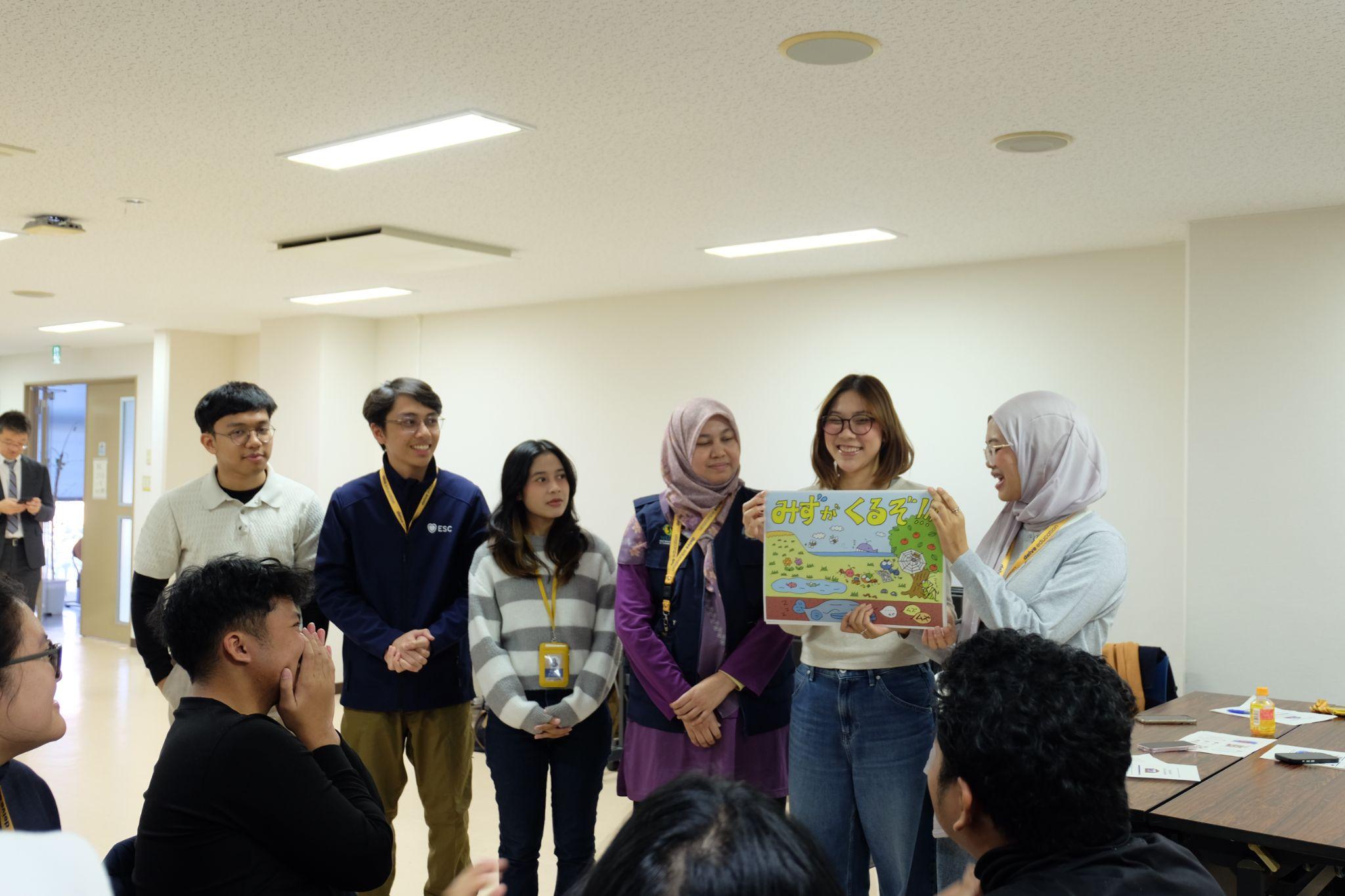
Taking on a more creative turn in the program’s activities, a Kamishibai workshop was held to communicate disaster prevention messages through storytelling. The Kamishibai is a traditional Japanese form of picture-storytelling using illustrated cards to convey and dramatically narrate a story in an engaging way. The participants were put into groups and tasked to present and perform for the other groups, giving them the chance to step out of their comfort zones and put their storytelling and narrating skills to the test.
Combined, all the activities the participants have done during the program in disaster prevention have propelled their efforts towards achieving the program’s broader objective, particularly in contributing to the Sustainable Development Goals. By learning and strengthening awareness of disaster risks, participants are directly contributing towards building community resilience, aligning with SDG 13: Climate Action. Furthermore, they have also better understood how to respond and to recover from such tragedy, allowing them to bring what they have gained from this valuable opportunity back to their own country in order to promote greater awareness within their own communities.
0 Comments