
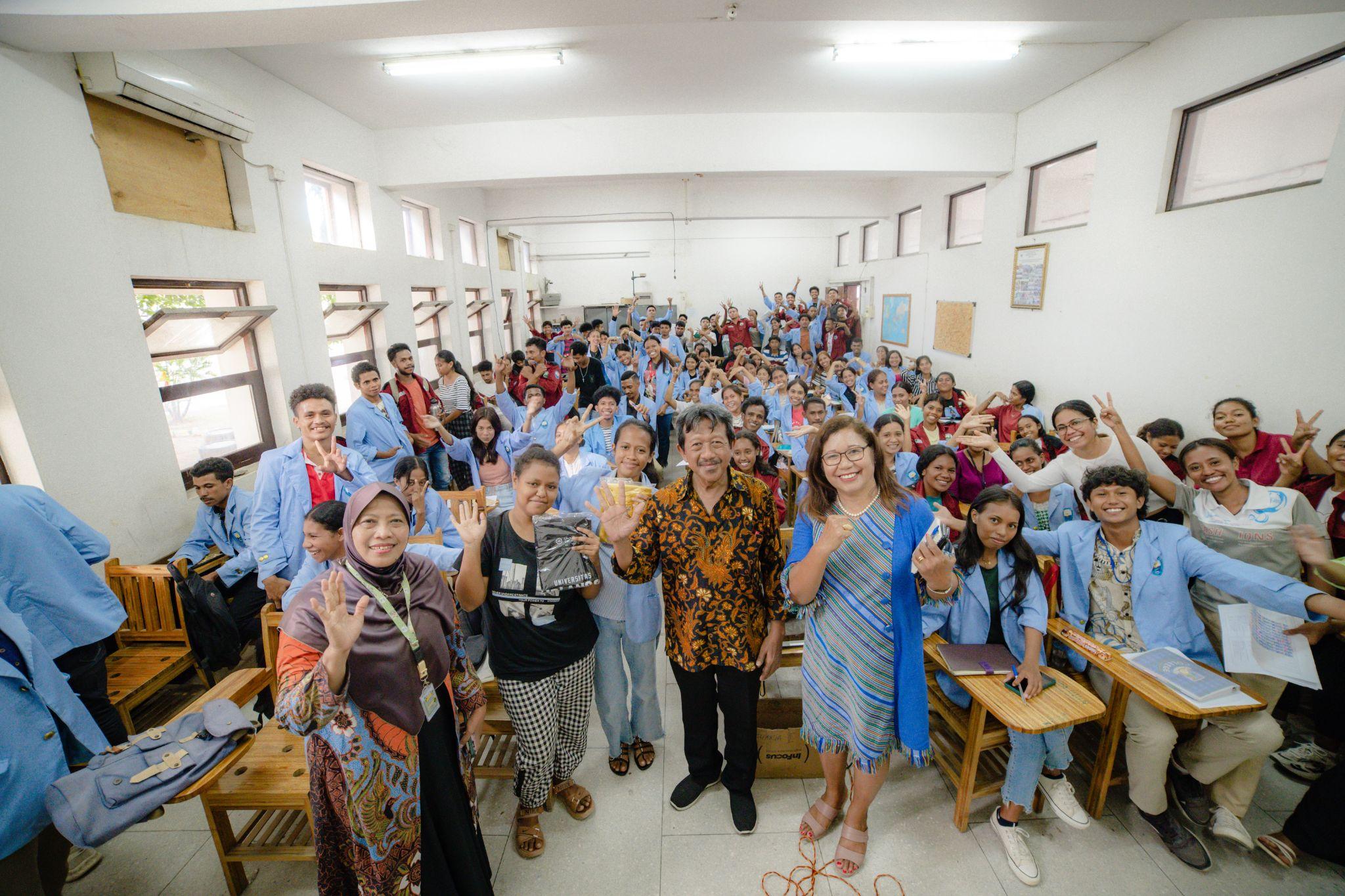
As part of the World University Association for Community Development (WUACD) initiative in Timor Leste, Group 3 that included three agricultural experts from Universitas Airlangga, hosted a series of workshops focused on agriculture at the Faculty of Agriculture and the Animal Department at Universidade Nacional Timor Lorosa’e (UNTL). These sessions, aimed at educating 30 students from UNTL’s Faculty of Agriculture and Animal Department, provided valuable insights into sustainable farming practices, waste management, and animal health. The program was a vital contribution to SDG 17: Partnerships for the Goals, as it exemplified international collaboration to enhance sustainable development through education and practical knowledge.
Empowering Future Agricultural Experts
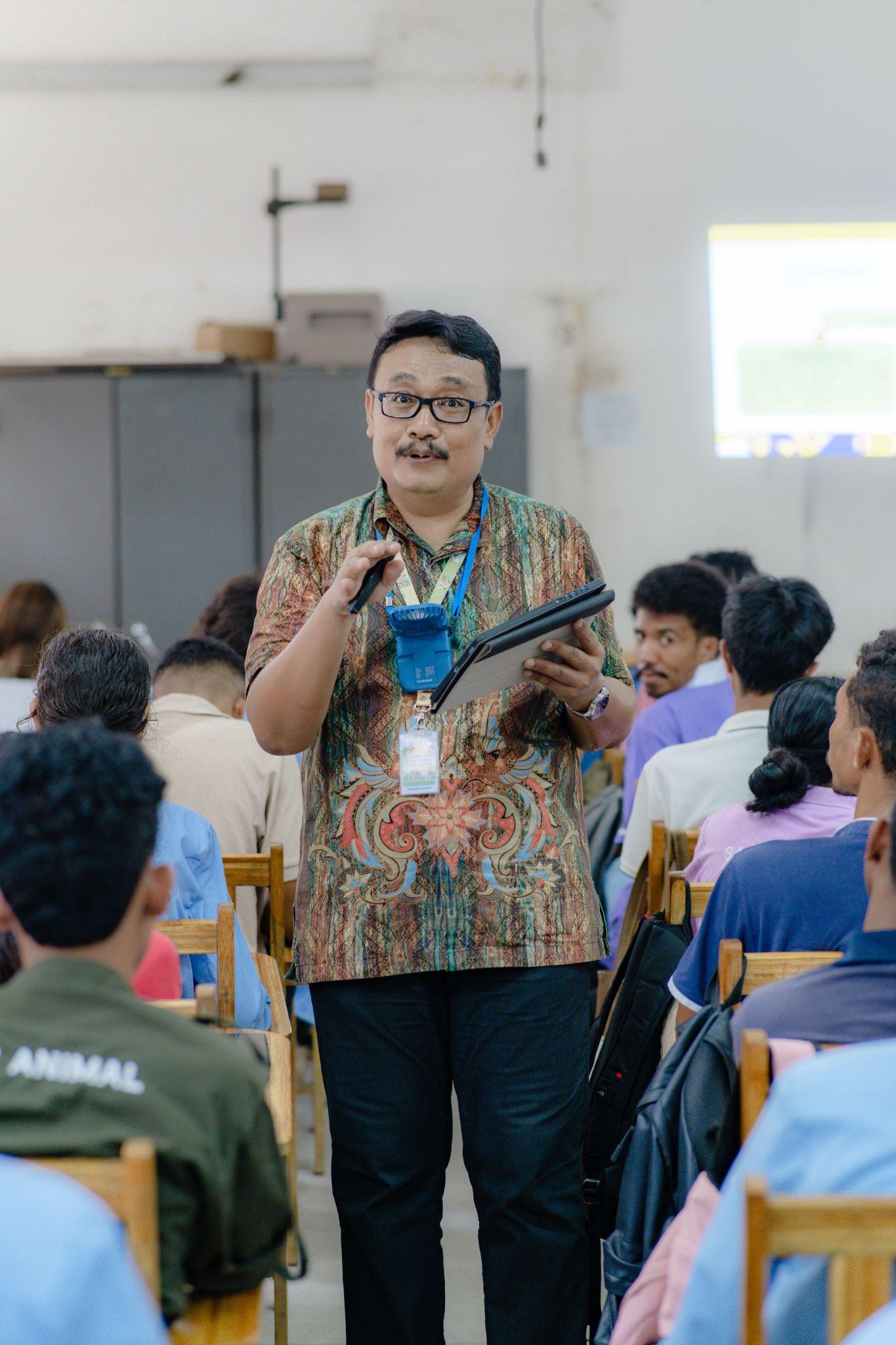
The workshops covered three key topics that are essential for agricultural development and environmental sustainability in Timor Leste. Waste Management, led by Prof. Dr. Ni’matuzahroh, Dra., emphasized the importance of managing agricultural waste in a sustainable way. The session highlighted strategies for recycling organic waste and reducing environmental impact, contributing to SDG 12: Responsible Consumption and Production. Students learned about the importance of waste management in preserving natural resources and promoting sustainable agricultural practices.
After that, there is a presentation about forage preservation and crop residue processing, presented by Dr. Moh. Anam Al Arif, drh., MP, focused on techniques for preserving forage and processing crop residues to improve livestock nutrition. This session provided students with practical solutions for ensuring the availability of feed throughout the year, contributing to SDG 2: Zero Hunger by improving livestock productivity and food security.
Sanitation and Health, lectured by Dr. Sudarmaji, S.KM., M.Kes., addressed the critical link between sanitation and animal health. The session stressed the importance of maintaining proper sanitation in livestock farming to prevent diseases and ensure both animal welfare and public health. This topic is aligned with SDG 3: Good Health and Well-being, as it highlights how proper sanitation practices can improve both animal and human health outcomes.
The agriculture-focused workshops at UNTL were an important step toward building a more sustainable agricultural sector in Timor Leste. By providing students with hands-on knowledge about waste management, forage preservation, and sanitation, the program supported both local agricultural practices and broader environmental goals. Through these collaborative efforts, SDG 17 was exemplified, showing how partnerships between universities and international experts can foster sustainable development and prepare the next generation of agricultural professionals.
0 Comments