
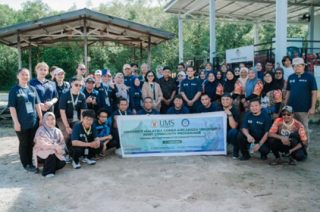
On 5th June 2024, the program opened with a symbolic ceremony of mangrove tree planting around Darau Wetland, Kampung Darau, Sabah, Malaysia. It is then resumed with an expert sharing session with representatives of Universitas Airlangga. The first sharing session, “Pollution Control & Form Pollutants to Innovation,” is delivered by Dr. Rizkiy Amaliyah Barakwan. In this session, she emphasized implementing waste management using 3R (Reduce, Reuse, Recycle). Untreated waste, substantial waste, can cause discomfort and pose health risks. The implementation of 3R reduces the adverse effects of solid waste while also producing goods with economic value that can be sold by the community. Dr. Laksmi Sulmartiwi then continues the second session with the excellent topic of “Innovation from Aquaculture.” She talks about the growing global demand for aquaculture due to the increase in demand for protein and how aquaculture products can be developed into diverse nutritional products. The product development involves the community as cultivation and business actors, bringing them nutritional products to combat malnutrition and economic goods to be sold.
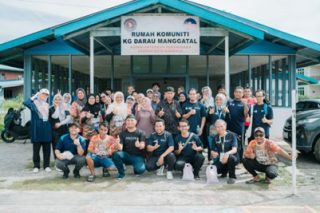
After an insightful presentation, a coffee break is held before the program continues with other expertise-sharing sessions, accompanied by hands-on activities. The activities are held in three different places, each with its unique theme and act. In the first community hall, Dr. Nadia Kartikasari brought up an excellent session regarding dental healthcare with dental examination as its hands-on activity. A lot of people still struggle with chronic oral conditions and lack of access to dental care, especially within socially marginalized groups. Dental health education has been proven effective in increasing knowledge, attitudes, and practices related to oral health and decreasing oral health problems. Within the second community hall, Associate Prof. Jaya Seelan talked about mushroom cultivation and showed real-time action on how to do it. Mushrooms are highly nutritious foods, used as tonic, medicine, and dietary foods. Mushroom farming has the potential to combat poverty, hunger, and malnutrition. People within the Kampung Darau community can access nutritional foods by farming mushrooms using low-quality materials such as crop residue and processed waste. This is because mushrooms can be grown in low-quality and valuable materials like horticultural waste, sawdust, and woodchips.
Meanwhile, Dr. Rahmat Yuliawan shared his insights on “Digital Marketing” with the community center community. With the emergence of the internet, current business activities are not limited to offline selling. The rise of digital markets and social media has enabled businesses to promote products through smartphones. With expert insights on digital marketing, it can help companies in the community to promote and sell their products online. These activities align with the values of SDG 3, “Good Health and Well-being,” SDG 8, “Decent Work and Economic Growth,” SDG 11, “Sustainable Cities and Communities,” and SDG 17, “Partnerships for The Goals.”
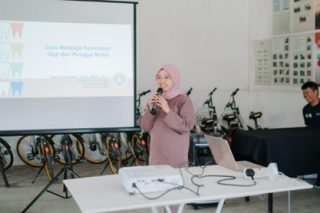
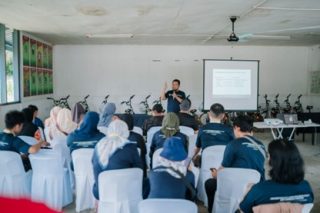
In addition, before closing the program for the day, the participants are given free time to do leisure activities and stroll around the Universiti Malaysia Sabah (UMS) area. This includes visiting the UMS “Pink Mosque,” the UMS Hospital Museum, and the UMS Aquarium. Some also see the ODEC Beach. Today’s activities mark the collective effort of Universitas Airlangga and Universiti Malaysia Sabah in their commitment to community development and ensuring the community’s well-being.
0 Comments