
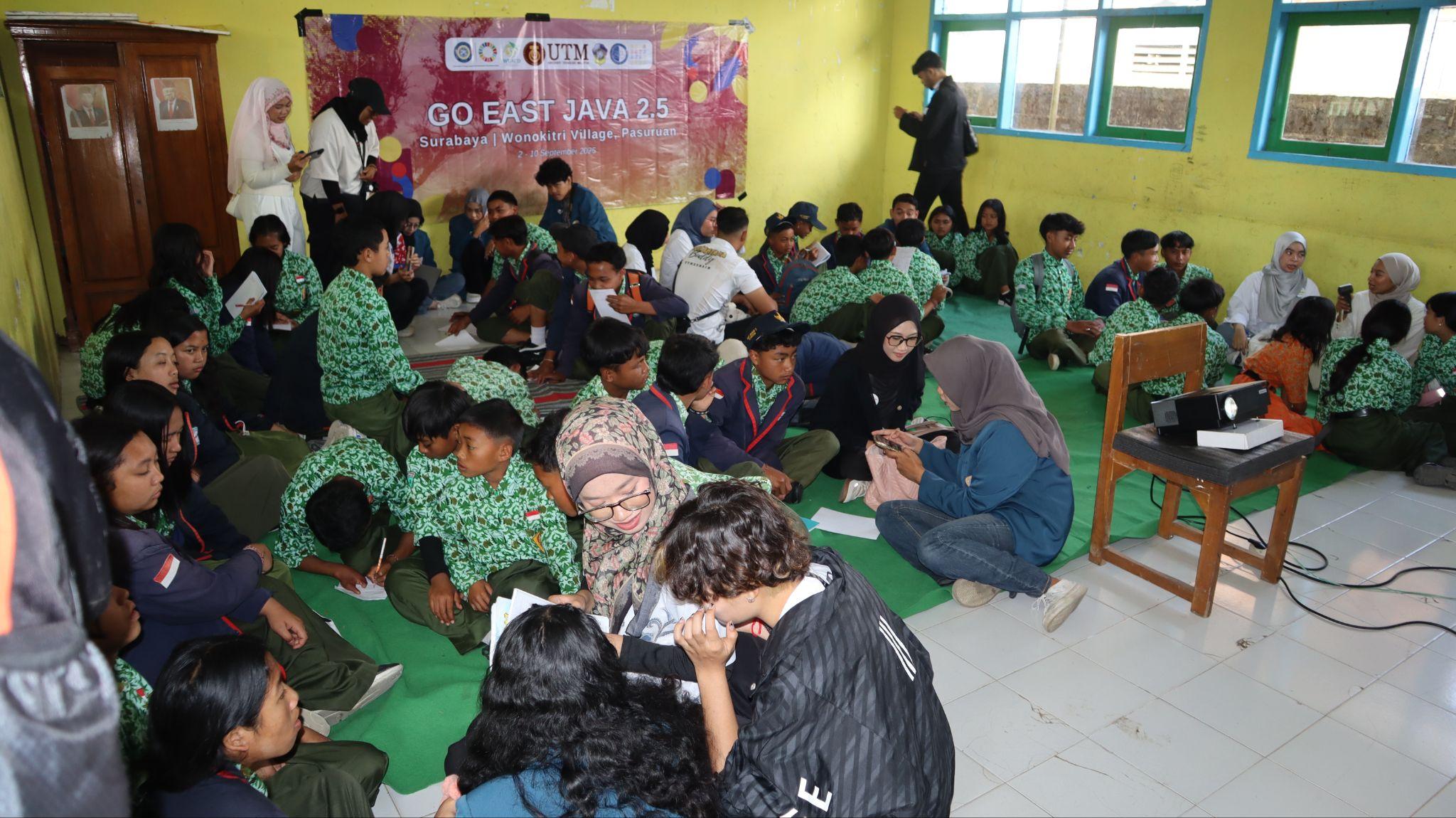
The program of “Kolej Rahman Putra Goes to Surabaya” was successfully held from 2 to 10 September 2025. The program was carried out in Desa Wonokitri, Tosari, Kabupaten Pasuruan, East Java, and involved collaboration between two World University Association of Community Development (WUACD) partners, Universiti Teknologi Malaysia (UTM) and Universitas Airlangga. The activities involved delivering lessons for the junior high school students, where the students of UTM shared their knowledge directly with the local students about Malaysia, education, and experience. This direct interaction between the students of UTM and local students can create or motivate the local students to continue their education. It gives the local students the desire to continue their studies at a higher level.
One of the major activities carried out in Kolej Rahman Putra Goes to Surabaya was the School Knowledge Transfer. In this activity, students from Universiti Teknologi Malaysia (UTM) came from various fields of study, such as students from the Faculty of Built Environment and Surveying, Faculty of Computing, Faculty of Science and Technology, and Faculty of Science. Students at UTM were directly engaged with local students by joining them in the classroom, interacting face-to-face, and guiding them throughout the classes. By conducting this program, it will not only help local students learn but also expose them to other cultural diversity through differences in language and culture.
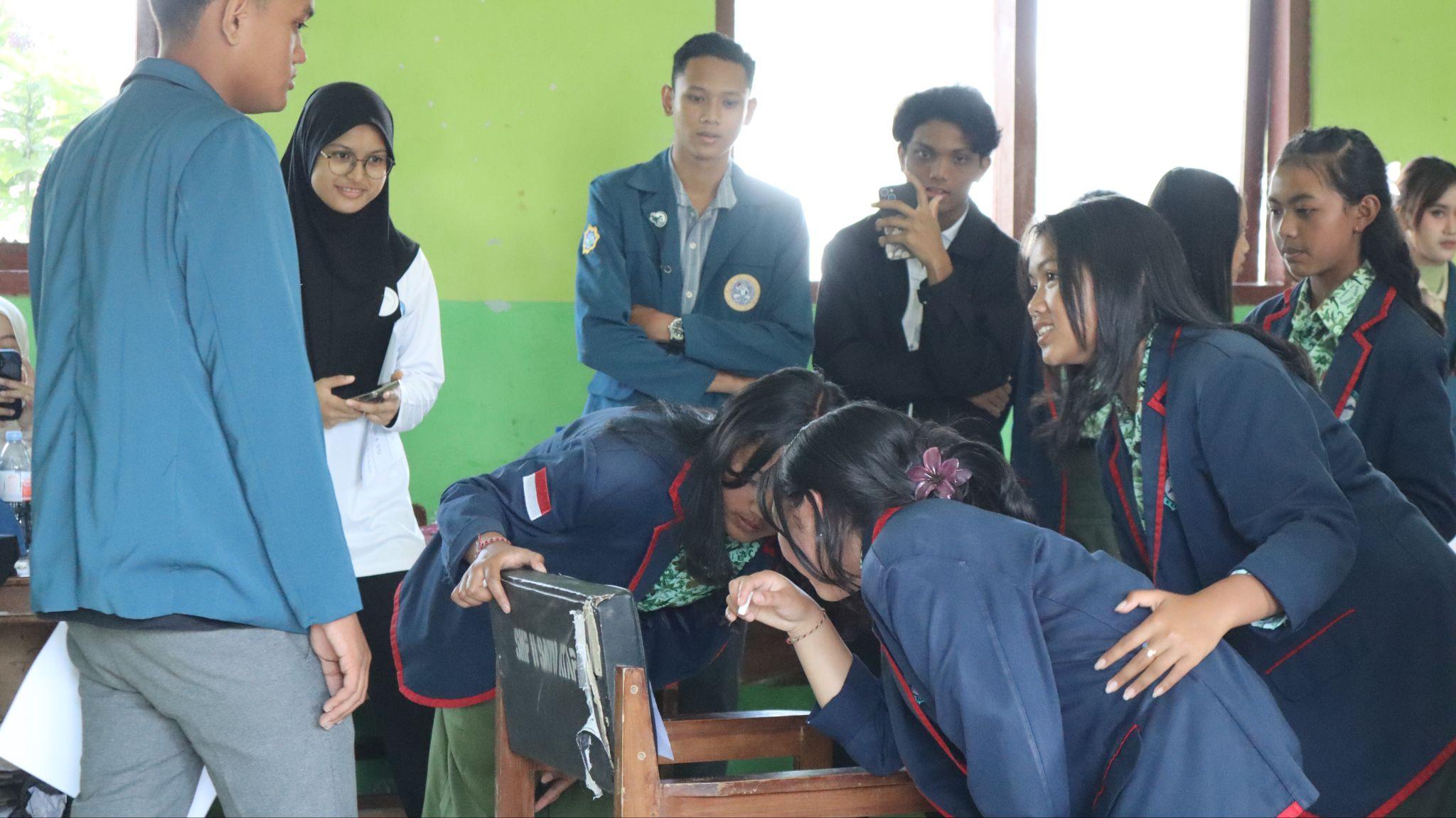
During the classes, students in grades 7 and 9 were divided into two classes, A and B. The class was divided into two due to the different needs of the local students. Class A is for students in grades 7 and 9, while Class B is for grade 8 students. The lessons during the School Knowledge Transfer activity were not only connected to the subject the children usually study at school, but also served as a motivation for them to continue their studies in higher education, such as high school and college.
For class A, due to the village’s educational belief/local educational belief that students only needed to finish junior high school before starting to work, the urgency is to make sure that 7th and 9th-graders complete their education. As a result of this belief, many students did not see the value of continuing their education. Besides, this mindset has led many local students to drop out of school early, affecting their future career opportunities and community development. Therefore, the grouping focused on 7th and 9th graders, who are at the beginning and final stages of junior high school. The main goal was to motivate them to complete their studies and not drop out. Because if this keeps continuing, it will become a problem not only for the students but also for the community, because without education, it is hard for them to get a good job and improve their lives. So, the materials were designed to focus more on encouraging them to keep studying and focus on reaching higher education.
For class B, the materials given to students focus on academic subjects that are part of their daily routine, such as quizzes on Indonesian language knowledge and math questions. Giving quizzes will help local students review what they have learned at school and apply their study material in a real, practical way. It can also help them to make learning feel more interactive.
The activities conducted in Junior High School (SMPN) 2 Satu Atap Tosari are a form of implementation of SDG 4, which emphasizes quality education through motivational lectures, math quizzes, and interactive learning sessions. By combining school lessons and motivational lectures, the program has provided an equal access to a quality learning experience that the student had rarely received before. It also helped to raise their awareness about the importance of education and the opportunities education can bring in the future for the local communities.
Through this program, the students in Desa Wonokitri gained both knowledge and inspiration that will be helpful for their future. The program helped them to see the value of pursuing a higher education. It also gave them a chance to interact with Universiti Teknologi Malaysia’s students, which made the learning process more engaging. On the other hand, Universiti Teknologi Malaysia’s students were also given the opportunity to directly engage with local students, which gave them a new perspective on Indonesian schools. Besides that, it also gives them an experience to share their knowledge about Malaysian culture. The activity also reflects the spirit of SDG 4, showing that quality education can empower students and open the door to future opportunities.
0 Comments