
World University Association for Community Development (WUACD) members, Universitas Airlangga and Universiti Teknologi Malaysia, held an international community development program called “Go-East Java 2.0”, a continuity of Go East Java, which previously was successfully held. The continuity of this collaboration between Universitas Airlangga and Universiti Teknologi Malaysia was a part of emphasizing Sustainable Development Goal 17 (Partnership for the Goals) in the way both universities fostered partnership to support global sustainability. This year, “Go-East Java 2.0” was held from February 20th, 2025, to March 6th, 2025, in four Villages in Banyuwangi: Gumuk Village, Licin Village, Banjar Village, and Jelun Village. This program involves the participation of two student organizations from both universities, the Student Executive Board of Universitas Airlangga and Kelab Lambaian Masyarakat of Universiti Teknologi Malaysia, along with the involvement of the local students from Faculty of Health, Medicine and Natural Sciences (FIKKIA) Universitas Airlangga. One of the main fields this community development wanted to focus on was the environment. That goal was then reflected in several activities related to environmental aspects of the community.
The first environmental activity started with identifying mosquito breeding sites in the surrounding environment of Gumuk Village, which was held on February 24th, 2025. All the participants went around the neighborhood to identify mosquito breeding sites, especially in places where mosquitoes were potentially present, such as toilets, water reservoirs, and pots. After the observation, the participants were given education to the society about dengue fever that might be caused by the mosquitos and its preventive steps. Through this activity, the participants of Go-East Java 2.0 wished that the society were getting better knowledge about maintaining a clean environment as one of the most important aspects to prevent dengue fever which can be started by identifying mosquito breeding sites.

On the next day, the environmental activity was held outside the four villages. The participants went to Sky Farm Glennmore, a place known as a sustainable residential area that carries an environmentally friendly concept. Participants got to learn and experience the actual implementation of sustainable living, which can be seen by the usage of solar panels as the primary energy source, the utilization of rainwater, and the regenerative plantation for healthy and sustainable products.

The exploration of the environmental program during Go East Java 2.0 did not stop on those two days, instead, it was continued on February 26th, 2025, as the participants went to Mutiara Tabuhan Islands to learn about the rehabilitation and preservation of coral reefs. Participants practiced to do coral reef transplantation using PVC pipes there. Banyuwangi, as one of the places that has magnificent underwater beauty, has much potential to grow its tourism sector. Therefore, it is essential for Banyuwangi to maintain its nature.
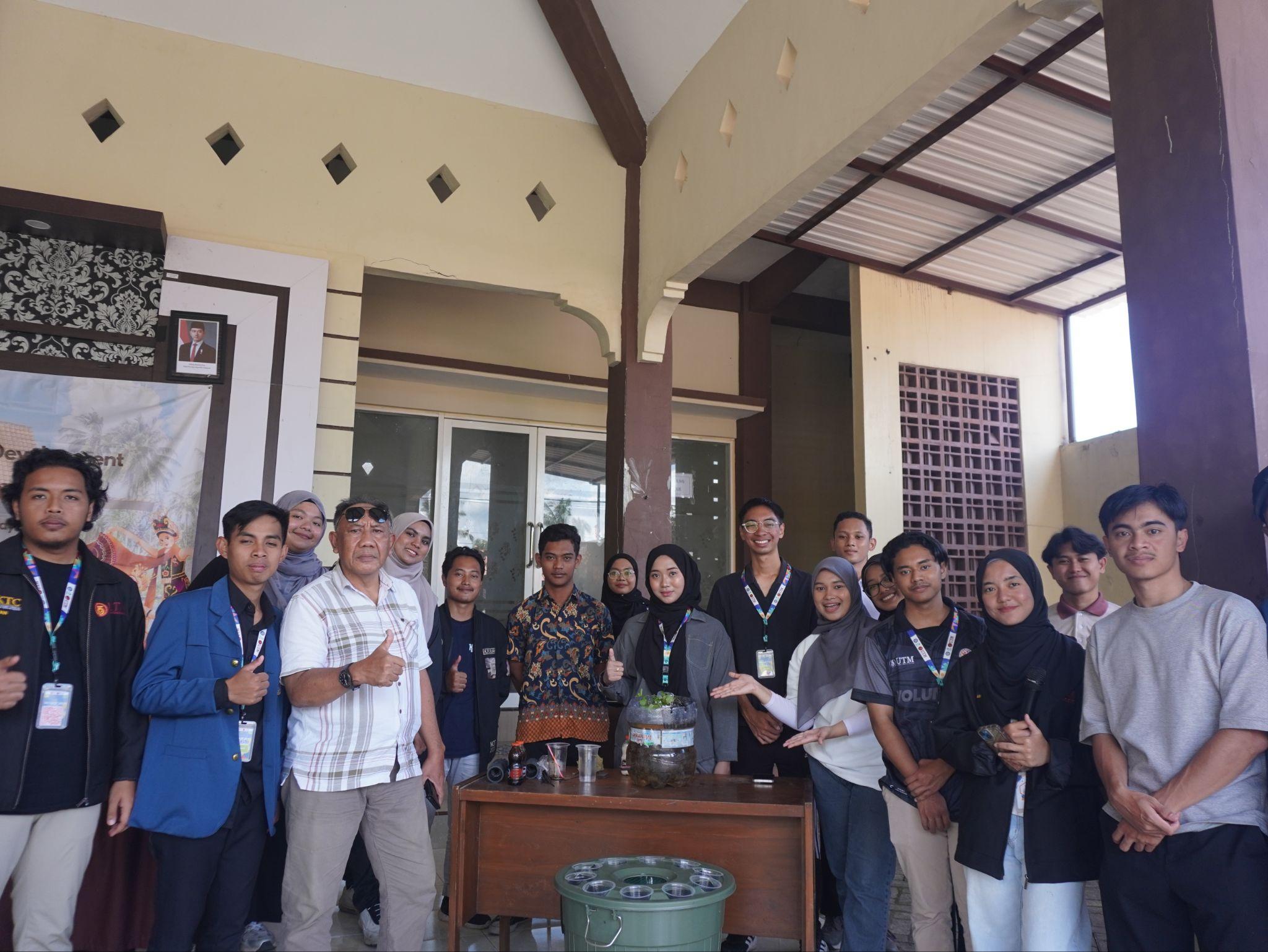
The next environmental activity was demonstrating aquaponics. In Banjar Village, this activity was done on March 1st, 2025 while later the other villages would also implement the program too. The students gave a demonstration to the local community regarding Aquaponics, a system that enables fish and plants to be in the same place where they can mutually benefit each other. The aquaponics were placed in village-owned land and monitored every three days. This program was expected to produce local food, both fresh vegetables and fish, for the community as well as minimize the need for chemical fertilizer since fish waste can provide natural nutrients for the plant.

On the second day of March, participants of Go-East Java 2.0 were introduced to solar panel technology as a sustainable energy source that can be used in the future. This activity started with a presentation by Program Penguatan Kapasitas Organisasi Kemahasiswaan (PPK Ormawa) Komikat Pecinta Alam dan Konservasi (KPAK) FIKKIA Universitas Airlangga Team. Participants continued the activity by learning about solar panels’ work principles, benefits, its installation methods and maintenance. Through this activity, the Go-East Java 2.0 committee aimed to reduce the dependency on fossil energy and encourage the use of renewable energy.
written by: Nazalia Rahmadiyanti
0 Comments