
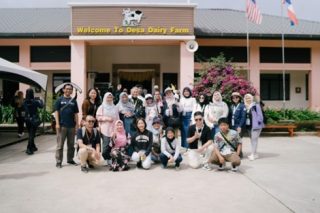
6 June 2024 marks the third day of the joint community program between Universitas Airlangga and Universiti Malaysia Sabah. In the early morning, participants departed to Kundansang to visit the farm fields of Desa Dairy Farm. Tourists often visit this grassfield area, which presents an alluring view of nature. Here, participants can enjoy fresh and natural dairy products made on the farm. The products include fresh milk, gelato, and yogurt. The farm also provides flavors like banana milk, passion fruit yogurt, blueberry yogurt, and many more. Another activity is an educational tour of how milk is processed into dairy products. Participants can understand how the farm produces high-quality products, from milk collecting to commercialization. At the next destination, the participants stopped in Kundasang Aquafarm, part of the Alumni UMS Project. The Kundasang Aquafarm is suitable for those who want to learn how to start an aquaponic farm. This farm applies a combination of aquaculture and hydroponic, saving up to 90% water usage for irrigation, optimizing small spaces, and eliminating using fertilizers and chemical pesticides. This system uses fish farming to provide natural nutrients to the plants. Packaged as agro-tourism, the Kundansang Aquafarm contributes to the community’s welfare by attracting tourists and giving workshops and highland agriculture skills courses. It also serves as a lettuce farm where tourists can experience harvesting and enjoy fresh, hand-picked lettuces.
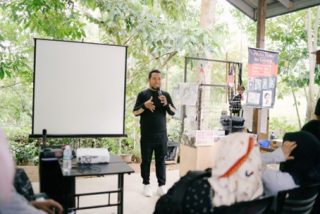
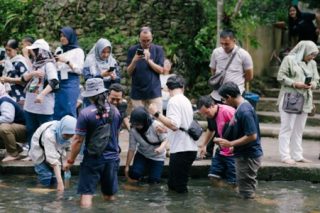
After a brief break and lunch, the participants went on a community visit focused on Bombon Community, Kampung Marakau Ranau, Sabah, Malaysia. Known as a fish spa, the Bombon Community is business tourism for locals and international visitors. On this occasion, Dr. Rahmat Yuliawan shared his knowledge in a session titled “Sustainable Tourism and MICE Industry from An Economic Perspective.” The session aims to broaden the community’s perspective on creating sustainable tourism through business tourism as a lucrative part of the tourism mix, as stated in SDG 8, “Decent Work and Economic Growth,” and SDG 11, “Sustainable Cities and Communities.” The community of Bombon is located near Ranau and is a habitat for various koi fishes living within the river streams. The fish spa is known as a famous tourist spot in Ranau. However, most of the visitors are usually families. To expand the business’s target market, Dr. Rahmat introduces a new customer market segment known as meetings, incentives, conferences, and exhibitions (MICE). The MICE industry provides tourism for big-scale groups such as meetings and events. By using MICE as an addition to the community business customer segment, the fish spa can become a meeting spot for conferences and a place to hold business meetings for companies. They can also partner with travel agencies to promote the fish spa to first-time tourists visiting Sabah. Not only will this increase the of visitors to Bombon Kampung Marakau’s fish spa, but it will also open new opportunities for the community, such as providing job opportunities and encouraging the youth to participate in innovations for the community.
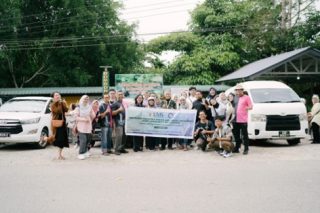
The implementation of this program has had a positive impact on the community. By directly contributing to knowledge sharing with the communities of Kampung Darau and Kampung Marakau, it enhances the people’s knowledge, skills, and technologies for a future of self-sustainable economies. The program’s participants encompass community development with health science, tourism, and plantation. Hopefully, with the program’s implementation, communities can get insight into how to develop their communities, especially throughout the rise of globalization and digitalization.
0 Comments